
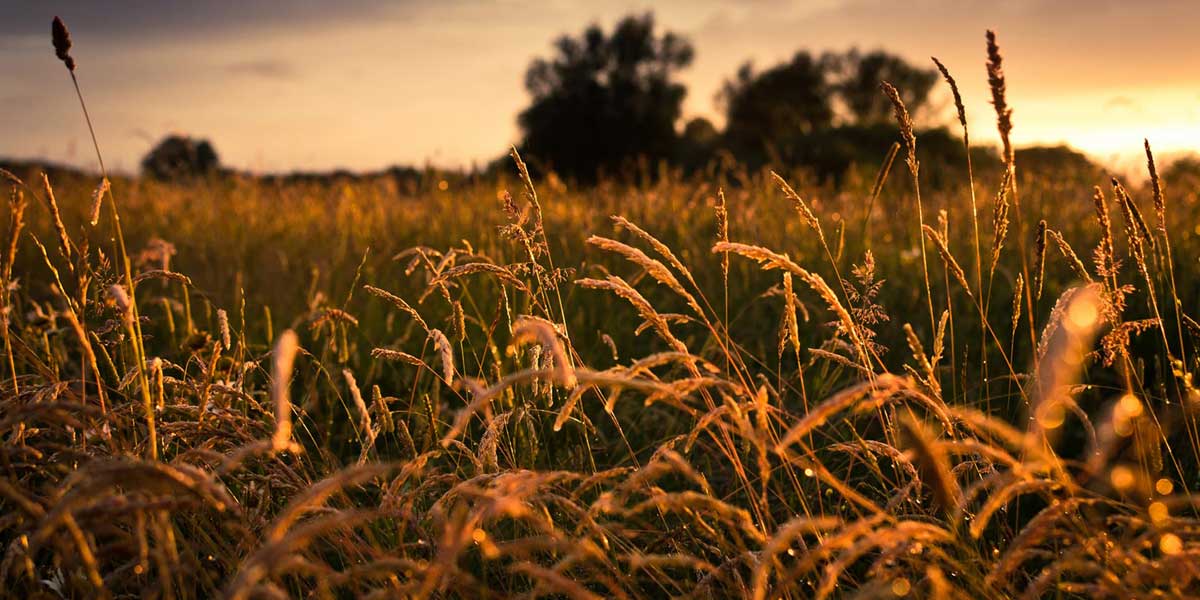
Withering Grass and Everlasting Glory
Time passes quickly. Life is short. Aging often catches us by surprise. One moment we’re young and full of energy, and the next, we feel the weight of time, age, and our own human frailty. The prophet Isaiah captures this reality with a striking image:
The grass withers, the flower fades
Isaiah 40.7
Because the breath of the LORD blows upon it;
Surely the people are grass.
This verse is a sobering reminder of human frailty. Most of us prefer the very next verse:
The grass withers, the flower fades,
But the word of our God stands forever. [Isaiah 40:8]
We like verse 8 because of the hope it inspires. God’s Word is unshakable. It’s solid and reliable, while our lives are subject to constant change.
I quote verse 8 every week when I finish reading our sermon text. I do that to remind myself, and the congregation, that while everything around us in the world is passing away, God’s Word endures forever, unchanged, untarnished, always reliable.
Facing Our Frailty
Verse 7 though, calls us to humbly face the truth of our own mortality and weakness, the truth that we are utterly dependent on God.
Isaiah’s message is clear: people are like grass. We sprout. We grow. We bloom for a moment. But inevitably, we fade. The imagery of grass and flowers reminds us that earthly life is fleeting, here today and gone tomorrow.
At first glance, this may seem discouraging, even depressing. It’s certainly not the kind of verse you typically find on a coffee mug or inspirational poster.
But Isaiah doesn’t leave us in despair. He points to a greater truth: while humanity is frail, God is strong. His Word is everlasting.
Once we catch a glimpse of the glory of God, of the everlasting nature of His Word, the delight we have in our own strength is exposed as foolishness. We recognize that all our strength and beauty is perishable and quickly fades to nothingness, in the light of God’s eternal glory.
God’s Power Over the Mighty
Later in Isaiah 40, the prophet expands this theme to include the rulers and powers of the world. He writes that princes and kings, the very symbols of human strength and authority, are nothing before the Lord. Their reigns are brief, and their influence is temporary. With merely a breath, God can scatter them like dry grass in the wind.
This is not mere poetic expression—it is a statement of ultimate reality. Empires rise and fall. Leaders come and go. The world’s most powerful figures are subject to the mortality and limits that define all mankind. In God’s eyes, even the mightiest rulers are like blades of grass that wither in a day.
For God’s people, this truth is a source of comfort, not fear. When we are oppressed, overlooked, or burdened by the weight of worldly powers, we can trust that their strength is fleeting. God alone is eternal. He alone rules forever.
The Everlasting Strength of God
Isaiah directs our eyes not only to the weakness of humanity but also to the boundless strength of God:
The everlasting God, the LORD,
The Creator of the ends of the earth,
Neither faints nor is weary. [Isaiah 40:28]
If we stopped at verse 7, we might feel depressed by our own frailty. But Isaiah takes us further. He reminds us that our hope doesn’t rest on our own fleeting strength. Instead, it rests on the everlasting power of the Lord. He is the One who never grows tired. He never falters and never fades.
This is the heart of the gospel promise: though we are weak, God is strong. Though we wither like grass, we have the hope of the resurrection. For those who trust in Him, there is a source of strength that is eternal and unshakable.
Finding Comfort in the Right Place
In a world that celebrates self-reliance and personal achievement, Isaiah’s words are counter cultural. They remind us that no amount of human ambition or effort can overcome the reality of our mortality. Yet this truth is not meant to crush our spirit—it is meant to redirect it.
Instead of placing our confidence in ourselves, our careers, our possessions, or even the most powerful world leaders, we are invited to place our trust in the everlasting God. He is the One whose word stands forever. He is the One from whom true strength flows.
The Apostle Peter applies this text when he writes:
…having been born again, not of corruptible seed but incorruptible, through the word of God which lives and abides forever, because

“All flesh is as grass,
And all the glory of man as the flower of the grass.
The grass withers,
And its flower falls away,
But the word of the LORD endures forever.”

Now this is the word which by the gospel was preached to you.
[1 Peter 1.23-25]
Our current experience of life is quickly over, but we have the promise of the gospel that by faith in Christ we are born anew of the Spirit, raised to new life in Him, and will one day join Him in the resurrection and live forever in the light of His presence.
As John Calvin put it:
This passage comprehends the whole Gospel in few words; for it consists of an acknowledgment of our misery, poverty, and emptiness, that, being sincerely humbled, we may fly to God, by whom alone we shall be perfectly restored.
As Isaiah concludes this chapter, he offers one of the most beautiful promises in all of Scripture:
But those who wait on the LORD
Shall renew their strength;
They shall mount up with wings like eagles,
They shall run and not be weary,
They shall walk and not faint. [Isaiah 40:31]
When we acknowledge our frailty and recognize that we are like grass, then we learn to trust in the Lord. It’s then that His power is made perfect in our weakness. His promise of the resurrection and the everlasting Kingdom become our sure hope and joy.
So yes, Isaiah 40:7 may not be your typical coffee cup verse. But perhaps it should be. It reminds us that apart from God, we are fleeting—but united to Him, we are sustained by the strength of the everlasting God. And that is a truth worth carrying with you every day.
Defining Theology
When discussing theology, defining your terms is important. Brance and Lauren have a discussion of theology term Confession of Faith, what a Confession is, how a Confession contributes to Christian unity, and how they should be used.
Resources Mentioned: