
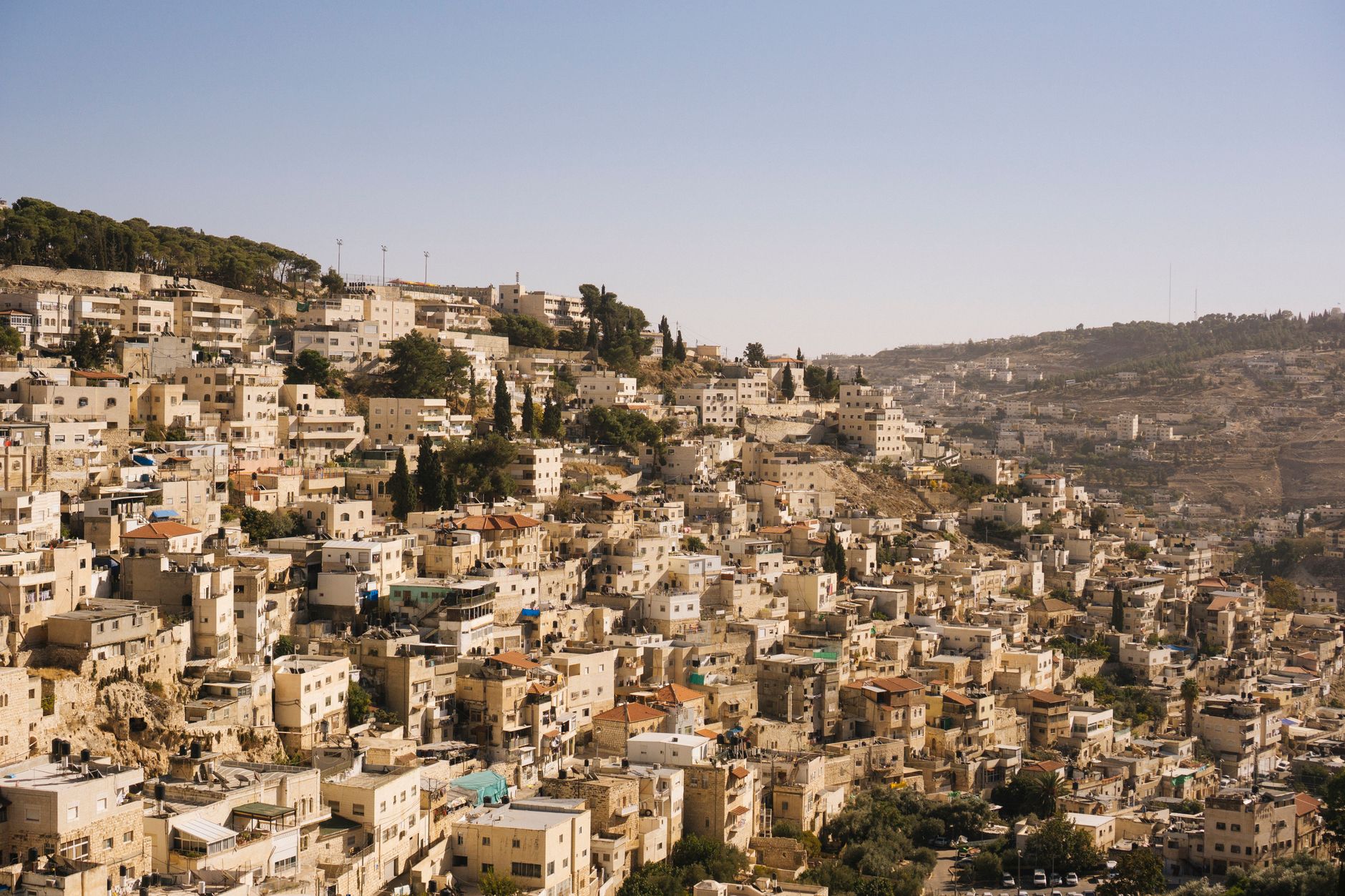
Pray for the Peace of Jerusalem – Psalm 122
Pray for the peace of Jerusalem:
Psalm 122.6
May they prosper who love you.
The Peace of Jerusalem
This is a true coffee cup verse, often taken out of context and misinterpreted.
How many times have you heard this verse quoted when the modern nation-state of Israel is in the news?
Certainly, when David wrote this Psalm he did intend that believers within the nation of Israel would pray for the peace of their capital city. The peace of Jerusalem would mean peace for the nation as a whole.
The question is: does this verse mean that Christians today should pray for the peace of the present day city of Jerusalem in the current state of Israel?
Well certainly, we ought to pray for peace in the world generally. Peace is always preferable to war.
And we ought to pray for true peace in Jerusalem, not simply the absence of armed conflict, but peace with God through the atoning blood of Jesus Christ.
But is that what is meant when Christians are told to pray for the peace of Jerusalem? And, however right it may be to pray for such peace in the modern city of Jerusalem, is that how the Psalm ought to be applied to believers today?
I don’t think so.
Earthly Jerusalem and Heavenly Jerusalem
First, we’re told that we should pray for the peace and prosperity of modern day Jerusalem, and Israel more broadly, because the text is read to mean that ethnic Israel must be the center of our attention because it is the center of God’s attention. And that if we would be blessed in our nation, we must bless Israel.
But this is a very shallow way to read the text of the Old Testament.
The New Testament tells us that the Old Covenant was full of types and shadows, but Christ is the substance.
So let no one judge you in food or in drink, or regarding a festival or a new moon or sabbaths, which are a shadow of things to come, but the substance is of Christ. [Colossians 2.16-17]
These are the ceremonial aspects of the Old Covenant. They were given to point the way to Christ.
For the law, having a shadow of the good things to come, and not the very image of the things [Hebrews 10.1]
The entirety of the Old Covenant was leading us to Christ who is the very substance of our redemption.
Now, if this was true concerning the law and the ordinances of the Old Covenant, we ought to ask if it was also true concerning the nation as a nation, and the capital city of Jerusalem as well.
Concerning the nation we read,
But you are a chosen generation, a royal priesthood, a holy nation, His own special people, that you may proclaim the praises of Him who called you out of darkness into His marvelous light; [I Peter 2.9]
Here, Peter, writing to Christians, quotes Exodus 19 and the words God spoke to the children of Israel as He brought them out of Egypt and constituted them as a nation.
‘Now therefore, if you will indeed obey My voice and keep My covenant, then you shall be a special treasure to Me above all people; for all the earth is Mine. And you shall be to Me a kingdom of priests and a holy nation.’ These are the words which you shall speak to the children of Israel. [Exodus 19.5-6]
It seems that Peter is equating the New Covenant church with the Old Covenant nation. And in Galatians, Paul ends his letter with this exhortation.
And as many as walk according to this rule, peace and mercy be upon them, and upon the Israel of God. [Galatians 6.16]
The apostle closes with a benediction of peace upon individual Christians and upon the ‘nation’ of the church as a whole, calling the church, ‘the Israel of God’.
But what about Jerusalem?
In Galatians, Paul interprets Abraham’s two sons symbolically saying:
for this Hagar is Mount Sinai in Arabia, and corresponds to Jerusalem which now is, and is in bondage with her children— but the Jerusalem above is free, which is the mother of us all. [Galatians 4.25-26]
The Jerusalem that now is, is clearly a reference to the earthly city of Jerusalem. But what is ‘the Jerusalem above’?
That question is answered in Hebrews.
But you have come to Mount Zion and to the city of the living God, the heavenly Jerusalem, to an innumerable company of angels, to the general assembly and church of the firstborn who are registered in heaven, to God the Judge of all, to the spirits of just men made perfect, to Jesus the Mediator of the new covenant, and to the blood of sprinkling that speaks better things than that of Abel. [Hebrews 12.22-24]
The Jerusalem above, the heavenly Jerusalem, is clearly the New Covenant church, with Christ as its Head and Mediator.
If then, we concern ourselves only with the earthly Jerusalem, we miss the larger point of Psalm 122.
Just as the Old Covenant saints prayed for the peace of the nation and of the city of Jerusalem, where the temple was, so New Covenant Saints ought to pray for the church, which is the temple of the living God (II Corinthians 6.16) and the heavenly Jerusalem.
Therefore, we ought to ask what it means to pray for the peace of the church.
Charles Spurgeon commented:
In a church one of the main ingredients of success is internal peace: strife, suspicion, party-spirit, division,—these are deadly things. Those who break the peace of the church deserve to suffer, and those who sustain it win a great blessing. Peace in the church should be our daily prayer, and in so praying we shall bring down peace upon ourselves; for the Psalmist goes on to say, “They shall prosper that love thee.”
True peace is given to the church by our crucified Lord who is the Prince of Peace. Shouldn’t the church, which is His body, bear the mark of the Prince who is its Head? The church should be marked by peace.
And let the peace of God rule in your hearts, to which also you were called in one body; and be thankful. [Colossians 3.15]
According to the Psalm, when we pray for the peace of the church, we bring a blessing upon ourselves. This is because we are praying for the people of God, the church of the living God, and not focusing on ourselves, but on our brethren. This allows our hearts to desire what God desires, and to find joy in worshipping with our brethren.
I was glad when they said to me,
Let us go into the house of the LORD. [v1]
The church is were the people of God go,
To give thanks to the name of the LORD. [v4]
So pray for the peace of the church.
Pray for the peace of the universal and invisible church throughout the world. Pray for your brethren who are persecuted and suffering in difficult circumstances around the globe.
And pray for the peace of the particular body you attend. Pray for peace, unity, brotherly love, and an end to strife.
When the local church is a place of peace, then God’s people worship with glad and thankful hearts, His name is praised and exalted, and we get a taste of the peace and joy of the heavenly Jerusalem!
Discussion
[1] In what ways can believers actively pursue and pray for peace within their local church?
- regular prayer for the peace and unity of the body
- refuse to gossip, or grumble, or participate in strife, practice humility, forgiveness
- pray for the pastors and deacons, that God would give them wisdom and patience
- commit to regular attendance upon the ordinary means of grace, the preaching, ordinances, prayer meetings, and fellowship of the church
[2] How does the peace of the local church relate to the universal church?
- when the local church is at peace, it is healthier and will be able to participate in missions and fellowship with the universal church with joy and generosity
- the peace of the local church testifies to the goodness and glory of God and that contributes to the witness of the universal church and the spread of the gospel in the world
Coffee Talk: Brance and Lauren talk about….Reformation Day and Dutch cookies.
Defining Theology: Brance and Lauren define and discuss the theological term Inspiration of Scripture.
Resources Mentioned: