
Crossing the River: Bunyan, Grace, and Everlasting Rest
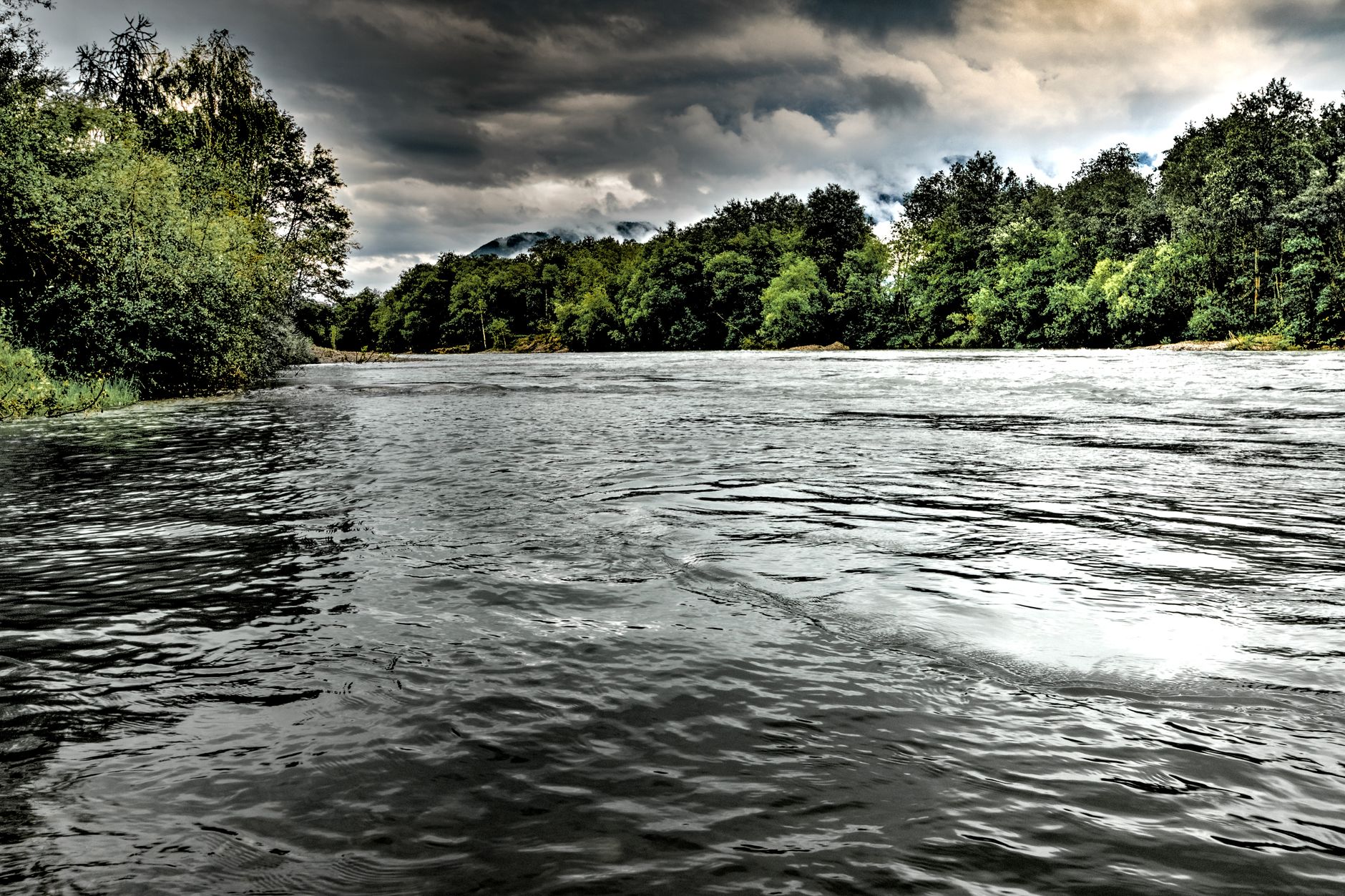
Now I further saw, that betwixt them and the gate was a river, but there was no bridge to go over; the river was very deep. At the sight, therefore, of this river the pilgrims were much stounded; but the men that went with them said, You must go through, or you cannot come at the gate.
The Pilgrim’s Progress
The pilgrims then began to inquire if there was no other way to the gate; to which they answered, Yes; but there hath not any, save two, to wit, Enoch and Elijah, been permitted to tread that path, since the foundation of the world, nor shall, until the last trumpet shall sound. The Pilgrims then, especially Christian, began to despond in their minds, and looked this way and that, but no way could be found by them by which they might escape the river. Then they asked the men if the waters were all of a depth. They said, No; yet they could not help them in that case; for said they, You shall find it deeper or shallower, as you believe in the King of the place.
They then addressed themselves to the water; and entering, Christian began to sink, and, crying out to his good friend Hopeful, he said, I sink in deep waters; the billows go over my head, all his waves go over me! Selah.
This excerpt is from John Bunyan’s masterpiece, The Pilgrim’s Progress.
The entire work is an analogy describing the difficulties, joys, and hopes of the Christian life. It’s a wonderful book that I highly recommend every Christian read.
This passage comes near the end of part one, which relates the individual experience of Christian, a pilgrim. Christian’s experience is largely autobiographical of Bunyan’s own experience.
The second part of the story relates the experience of Christian’s wife and children, along with a growing group of others, relating the experience of a local church. It also ends with many of the characters crossing the river and entering the Celestial City.
Death is unavoidable
The river is symbolic of death, as is made clear by the reference to Enoch and Elijah being the only ones allowed to enter the Celestial City without crossing the river.
So all the days of Enoch were three hundred and sixty-five years. And Enoch walked with God; and he was not, for God took him. [Genesis 5.23-24]
We don’t know exactly what that involved, but given the distinction between verse 24 and the surrounding verses which explicitly say that the men died, it certainly means that Enoch was in some way translated to heaven without experiencing physical death.
Similarly, Elijah was taken up to heaven without experiencing physical death.
Then it happened, as they continued on and talked, that suddenly a chariot of fire appeared with horses of fire, and separated the two of them; and Elijah went up by a whirlwind into heaven. [II Kings 2.11]
Enoch and Elijah were the only ones, each a prophet during a different age of the earth, Enoch during the antediluvian age, and Elijah during the Old Covenant age. All others must pass through the River of Death before entering heavenly country. Until the end of the New Covenant age when the last trumpet shall sound.
The Promised Land
Bunyan uses the analogy of crossing a river for crossing the threshold of physical death into the afterlife.
The analogy is taken from the children of Israel crossing the Jordan river into the Promised Land under the leadership of Joshua.
The Promised Land was a type of the New Heavens and Earth that are our inheritance in Christ. Abraham understood this.
for he waited for the city which has foundations, whose builder and maker is God. [Hebrews 11.10]
A few verses later, referring back to Abraham, Isaac, and Jacob, the Scripture says:
These all died in faith, not having received the promises, but having seen them afar off were assured of them, embraced them and confessed that they were strangers and pilgrims on the earth. For those who say such things declare plainly that they seek a homeland. And truly if they had called to mind that country from which they had come out, they would have had opportunity to return. But now they desire a better, that is, a heavenly country. Therefore God is not ashamed to be called their God, for He has prepared a city for them. [Hebrews 11.13-16]
Abraham knew that the Promised Land was not his home. He was a stranger and pilgrim on this earth. He was seeking a better, that is, a heavenly country as his homeland.
Romans tells us that Abraham understood the promise to be far greater than simply the Promised Land of Canaan.
For the promise that he would be the heir of the world was not to Abraham or to his seed through the law, but through the righteousness of faith. [Romans 4.13]
Abraham understood that the Promised Land was a type, a shadow, and the reality is the coming Kingdom of Christ, the New Heavens and Earth.
So crossing the Jordan into the Promised Land was a type pointing forward to crossing over from this life into the life of the heavenly country and entering the Lord’s rest.
The generation that rebelled after leaving Egypt was punished with 40 years of wandering and then death in the wilderness.
For forty years I was grieved with that generation,
And said, “It is a people who go astray in their hearts,
And they do not know My ways.”
So I swore in My wrath,
“They shall not enter My rest.” [Psalm 95.10,11]
Joshua led the next generation to cross the Jordan River and enter that rest. But He couldn’t give them eschatological rest.
For if Joshua had given them rest, then He would not afterward have spoken of another day. There remains therefore a rest for the people of God. For he who has entered His rest has himself ceased from his works as God did from His. [Hebrews 4.8-10]
Christ has entered His rest. We keep the Lord’s Day, Sunday, the Christian Sabbath, as a type of our final rest in the New Heavens and Earth.
The River of Death
Joshua, whose name means YHWH is Savior, led the Children of Israel through the River into the rest of the land.
Jesus, the Greek version of the Hebrew name Joshua, who is our Savior, leads His people through the River of Death into our heavenly rest.
He has crossed over before us and made a way for us.
In Joshua, when they crossed the river, the priests entered the water first, carrying the Ark of the Covenant, and the waters parted.
Joshua told the people,
Behold, the ark of the covenant of the Lord of all the earth is crossing over before you into the Jordan. [Joshua 3.11]
And when the River parted for the children of Israel, it says:
as those who bore the ark came to the Jordan, and the feet of the priests who bore the ark dipped in the edge of the water (for the Jordan overflows all its banks during the whole time of harvest), that the waters which came down from upstream stood still, and rose in a heap very far away at Adam, the city that is beside Zaretan. So the waters that went down into the Sea of the Arabah, the Salt Sea, failed, and were cut off; and the people crossed over…[Joshua 3.15-16]
When the priests with the ark entered the waters, the waters rose up in a heap at Adam, and the waters failed and were cut off that went to the salt sea.
To be cut off is to die in biblical terminology. The salt sea is also called the dead sea, because no fish live in it due to the extreme salt content.
So the waters of the river were stopped at Adam (the federal head of the Covenant of Works which condemns all mankind) and the waters which fed the sea of death were themselves cut off, or killed.
This all points toward the death of death in the death of Christ as John Owen would later put it.
Jesus, our Joshua, our High Priest, our Ark of the New Covenant in whom is the Law and Testimony of God’s grace and salvation, has passed through the waters of the River of Death for us, defeating death, so that we might have life and rest in Him.
Bunyan pictured all this beautifully in His analogy.
Christian must cross the river to enter the heavenly rest. The waters of death overwhelm him. But his hope (represented by his friend Hopeful) helps him find a firm footing in the grace of Christ.
To whom also Hopeful added this word, “Be of good cheer, Jesus Christ maketh thee whole.” And with that Christian brake out with a loud voice, “Oh, I see him again! And he tells me, ‘When thou passest through the waters, I will be with thee; and through the rivers, they shall not overflow thee.’” Then they both took courage, and the enemy was after that as still as a stone until they were gone over. Christian therefore presently found ground to stand upon; and so it followed that the rest of the river was but shallow.
In the words of W.Y. Fullerton:
The legacy which Bunyan has left us is the assurance of grace. Grace! Grace abounding! Grace abounding to the chief of sinners!…Looking back, he sees grace; looking forward, he sees grace; looking around, he sees grace; looking upward he sees grace most of all. [Fullerton. The Legacy of Bunyan, 91]
May we all learn this lesson with Bunyan. The grace of Christ is sufficient for us. His grace is sufficient for this life. His grace is sufficient for the forgiveness of sins. His grace is sufficient for the crossing of the River of Death and entering into the rest of our Lord.
Discussion
[1] Today is the 338th anniversary of Bunyan’s crossing of the river and entering into the rest of his Lord. How does Bunyan’s depiction of the River of Death in The Pilgrim’s Progress deepen our understanding of the Christian view of death and eternal rest?
- we all face the prospect of physical death, and often fear it because we walk by sight and not by faith
- the promise of everlasting rest in Christ is our confident expectation that death is not the end, but only the doorway to greater life
- the encouragement of Hopeful teaches us to approach the end of life with confidence in the grace of Christ and the hope of everlasting rest
[2] How does the theme of grace, as highlighted by Christian’s crossing and Hopeful’s encouragement, speak to the challenges and fears Christians face at the end of life?
- grace reassures believers that we are accepted in Christ and need not fear judgment
- grace shifts our focus from self and fear to hope in Christ and His victory over death
- Hopeful’s encouragement reminds us to rest in God’s promises when facing fear or uncertainty
Coffee Talk: Brance and Lauren talk about bourbon barrel aged coffee
Defining Theology: Brance and Lauren define and discuss the theological term Inerrancy.
Resources Mentioned:
2LCF (2nd London Baptist Confession of Faith)
Pilgrim’s Progress (use the code COFFEE for 5% off at checkout)